Fantasy Football Value Picks: The best arbitrage picks for 2024 fantasy drafts
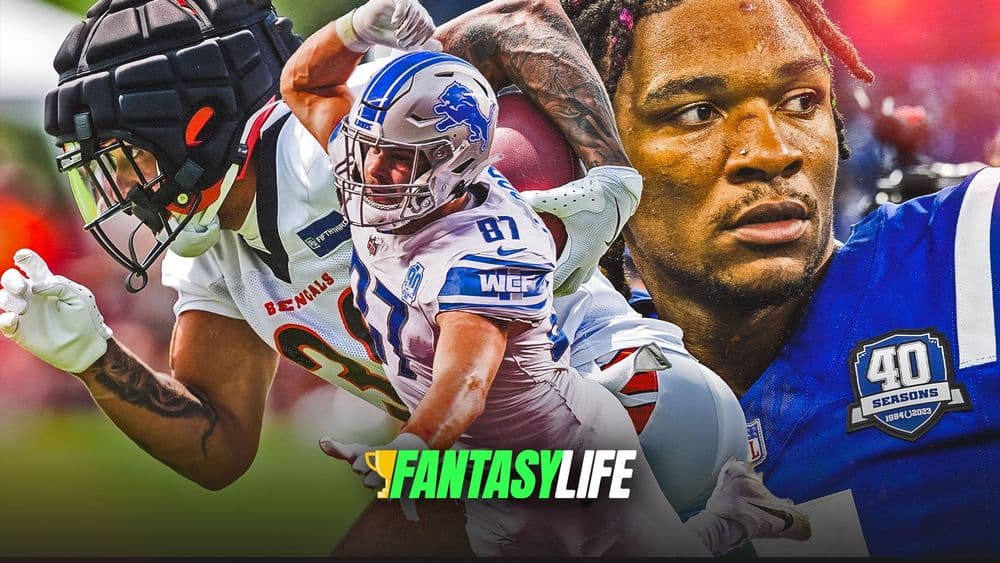
Ian Hartitz digs for fantasy football value picks for 2024, finding arbitrage versions of some of the more expensive buzzy names for the 2024 fantasy football season.
A fun question to ask yourself before making any given fantasy football draft pick:
“What can I get now that I can't get later?”
While identifying a cheaper version of any given player doesn't necessarily imply that the more expensive talent is mispriced, it does help drafters better utilize tier-based drafting to hopefully maximize every pick at our disposal.
This takes us to today's goal: What are some of the best "arbitrage" picks available in current fantasy drafts?
Basically, who are the rich, middle-class, and poor man's versions of various archetypes?
As always: It's a great day to be great.

Premium
Go FantasyLife+
Your league is unique. Your advice should be too. Get personalized tools, rankings, and projections tailored to your fantasy football league settings.
Questionable passer with high-end rushing ability
- Rich man: Colts QB Anthony Richardson (QB6, pick 51 ADP on ESPN)
- Middle-class man: Commanders QB Jayden Daniels (QB12, 123.6)
- Poor man: Steelers QB Justin Fields (QB25, 169.1)
High-end dual-threat QBs don't really bust in fantasy land. Of the 27 signal-callers with 100-plus carries in a single season over the past 10 years:
- 11 (41%) finished as top-three fantasy QBs on a per-game basis
- 16 (59%) finished as top-six fantasy QBs
- Only 3 (11%) finished outside fantasy's top-12 QBs (2014: Collin Kaepernick, 2018: Lamar Jackson, 2020: Cam Newton)
Hell, even some of the league's very worst passers in Tim Tebow (QB8 in Weeks 7-17, 2011) and Taysom Hill (QB6 in Weeks 11-14, 2020, and QB7 in Weeks 13-15, 2021) provided legit great stretches when thrust into action back in the day.
High-end rushing volume has routinely helped turn mediocre real-life QBs into fantasy stars over the years.
Current Fantasy Life Projections have Daniels (734 rush yards), Richardson (633) and Fields (413) as top-eight finishers at the position in terms of total yards on the ground. The latter is only that low because of the expectation that Fields won't start the entire season, as the NFL's second-ranked all-time QB in career rushing yards per game would vie for the top spot with the assurance of 17 starts.
This brings us to our aforementioned group of subjects:
- The potential for Richardson to emerge as the Colts' goal-line hammer is the main driver behind his lofty top-six standing. He was the NFL's No. 1 QB in fantasy points per dropback as a rookie.
- Daniels needs to chill out on his Johnny Knoxville-esque open-field tendencies, but otherwise, the reigning Heisman Trophy winner stands out as arguably THE late-round QB option of 2024 should the Injury Gods look the other way.
- Only Josh Allen, Jalen Hurts, Patrick Mahomes, Lamar Jackson and Joe Burrow have averaged more fantasy points per game than Fields over the past two seasons. Arthur Smith's last QB, Desmond Ridder, posted six top-12 finishes (!) last season despite, you know, sucking at football.
Five- and six-point passing TD leagues obviously change things, but otherwise? Sign me up for the exact archetype that has served as fantasy's closest thing to a legit cheat code for the better part of eternity.
Pocket passer surrounded by high-end weapons
- Rich man: Texans QB C.J. Stroud (QB5, 46.6)
- Middle-class man: 49ers QB Brock Purdy (QB11, 107.5)
- Poor man: Dolphins QB Tua Tagovailoa (QB15, 137.8) and Rams QB Matthew Stafford (QB21, 163.5)
This offseason I put together a "Supporting Cast Rating" that takes every offense's average team PFF rush, receiving, pass-blocking and run-blocking grades (everything except passing). The top six groups from last year were as follows:
- 49ers
- Lions
- Ravens
- Dolphins
- Eagles
- Rams
Yes, the Texans ranked just 20th in this metric last season. Also yes, the newfound presence of Stefon Diggs, Joe Mixon and *knocks on wood* a healthier offensive line should elevate Stroud's surrounding cast to something close to elite heights in 2024 and beyond.
As for Purdy, the (expected at the time of writing) loss of Brandon Aiyuk does indeed hurt when accessing the best groups of skill-position players, but then again, the rising third-year QB doesn't get NEARLY enough credit for his ability to make good things happen off-script, and it's not like this San Fran offense is overly lacking in remaining weaponry anyway.
Small-sample size be damned: Aiyuk has been injured or borderline benched in essentially three non-Week 18 games over the past three regular seasons … and the 49ers scored 41, 30 and 30 points.
And then there are Tua and Stafford, who offer even less rushing production than Stroud and Purdy, but each benefit from the presence of *two* dope WRs and a consistently brilliantly-schemed offense.
Now, Tua led the NFL in passing yards last season and finished as the QB19 in fantasy points per game; even high-end efficiency through the air isn't always enough to yield elite results in fantasy land. Still, this argument could also be used against the idea of using a higher-round pick on Stroud and Purdy, so taking the relatively cheaper "versions" of them makes sense.
One could argue Jared Goff fits this archetype as well, but I have a slightly tougher time getting behind the "high-end weapons" part of the equation when the Lions' lofty ranking is being boosted quite a bit by the team's elite rushing attack and PFF's No. 1 ranked offensive line ahead of 2024. This isn't to suggest Goff is a bad pick at ADP; he just didn't fit this category as cleanly as the other guys. Cool? Cool.
Young, explosive committee RB in a solid offense
- Rich man: Lions RB Jahmyr Gibbs (RB6, 15.5)
- Middle-class man: Steelers RB Jaylen Warren (RB26, 95.9)
- Poor man: Bengals RB Chase Brown (RB41, 138.1)
Fantasy Life Projections have these backs receiving the following usage in 2024:
- Gibbs: 180 carries, 68 targets
- Warren: 153 carries, 56 targets
- Brown: 153 carries, 44 targets
Now, we're stretching the "solid" offense part of the equation a bit for Warren, but at a minimum, we should feel pretty confident in Arthur Smith's offense continuing to produce plenty of fantasy-friendly opportunities for its RBs. Overall, Smith-led offenses have ranked 29th, 30th, 12th, 32nd and most recently 30th in pass play rate, and last year's Falcons ranked fifth in expected RB PPR points per game despite the offense as a whole finishing 26th in scoring.
Yes, each of Gibbs, Warren and Brown are fully expected to work alongside the likes of David Montgomery, Najee Harris and Zack Moss.
Also yes, Gibbs, Warren and (to a lesser extent) Brown would immediately enter the high-end RB1 conversation should their backfield mate miss any time during the 2024 season.
These RBs offer a solid PPR-induced floor thanks to their explosive pass-catching abilities, while the ceiling is the roof should the offense ever get fully turned over to them. Not a bad deal to sign up for – there's a reason why Brown is one of Dwain McFarland's favorite sleepers ahead of 2024.
Early-down grinder with double-digit TD upside
- Rich man: Ravens RB Derrick Henry (RB8, 18.8)
- Middle-class man: Lions RB David Montgomery (RB21, 75.8)
- Poor man: Cowboys RB Ezekiel Elliott (RB35, 112.9) and Chargers RB Gus Edwards (RB40, 136.2)
Last season just 12 offenses managed to feed their RBs more than 15 carries inside the five-yard line. The Lions (27, 1st), Ravens (24, 4th), Cowboys (18, tied for 7th) and Chargers (16, tied for 11th) were all among them, and each has a fairly clear lead early-down option ahead of 2024.
It's tough to not be enamored with the possibilities of the Ravens lining Henry up next to Lamar freaking Jackson, but will his expected 200-plus carries really go that much further than Montgomery?
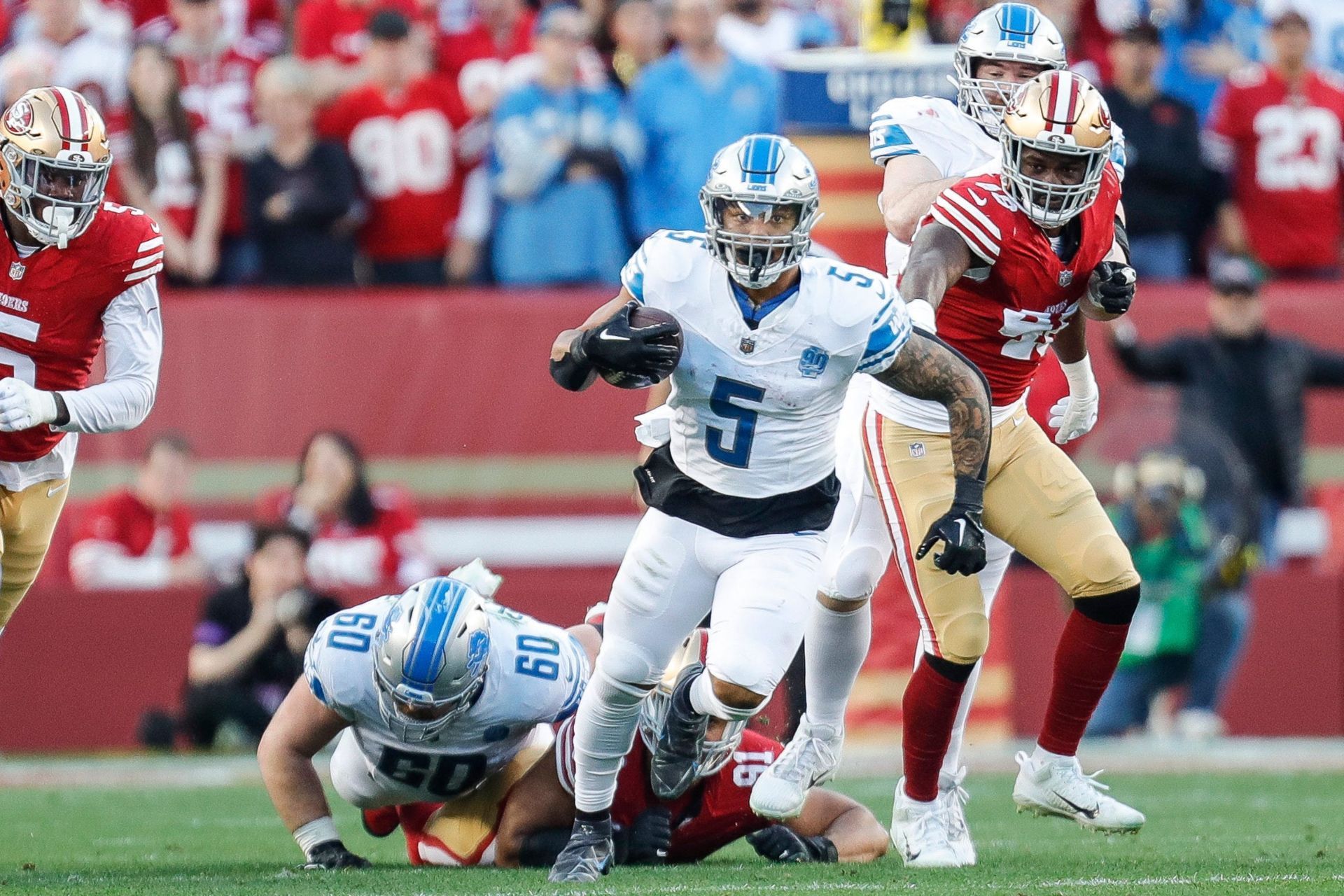
Lions running back David Montgomery runs against 49ers during the first half of the NFC championship game at Levi's Stadium in Santa Clara, California, on Sunday, Jan. 28, 2024.
D-Mont actually averaged more PPR points per game than Henry (14.8 vs. 14.5) last season, which could certainly change in 2024 thanks to the Big Dog's improved offensive environment, but either way: These are two of the NFL's top-10 expected rushing TD leaders in the betting markets, and one of them is regularly available in Round 7 or later of fantasy drafts.
Then there's Zeke and the artist known as Gus Bus. The former RB scored 12, six, 10 and 12 TDs during his final four seasons in Dallas, while the latter racked up 16 scores over the last two seasons in Baltimore … with a long TD of seven.
Neither back is expected to necessarily knock on the door of 300-plus touches in the year 2024; just realize each tentatively is expected to rather easily lead their (usually good) offenses in goal line carries, which is a decent role to bet on with ADP regularly well outside the top-100 overall picks.
Talented separator with 150-plus target upside and QB questions
- Rich man: Jets WR Garrett Wilson (WR8, 15.8)
- Middle-class man: Giants WR Malik Nabers (WR24, 64.5)
- Poor man: Panthers WR Diontae Johnson (WR37, 103.4)
Each of these WRs is fully expected to work as their offense's undisputed No. 1 pass-game option with varying degrees of QB concerns.
Kudos to Wilson (79, 7th) and Johnson (92, 1st) for earning two of the top scores in ESPN's "Open Rating" over the past two seasons, which is meant to quantify separation ability on a per-route basis. Meanwhile, Nabers has earned more consistent training camp praise than seemingly anyone in the NFL; his LSU film and Reception Perception profile reflect the reality that this is a tough assignment in man coverage for any mere mortal.
Of course, Wilson is getting the benefit of the doubt among the group thanks to, you know, playing with a QB who has won two MVP awards in the last four seasons. Now, the 2022 version of Aaron Rodgers wasn't nearly as prolific, and it's fair to wonder how the 40-year-old veteran will look coming off an Achilles tear, but "better than Daniel Jones and Bryce Young" still feels like a safe assumption.
The allure for Nabers and Johnson comes from the reality that WRs with their sort of target ceilings usually aren't available outside of fantasy's top-50 picks, let alone the top 100 in the latter WR's case. It'd certainly be a lot cooler if they were playing with better QBs; just realize play-callers Brian Daboll and Dave Canales have proven to be pretty, pretty, pretty good at their jobs over the years, and the reality that low-aDOT receptions caught for an entire fantasy point in full-PPR scoring adds underrated fantasy-friendly floors for both.
Aging stud forced to adjust to life in a new offense
- Rich man: Texans WR Stefon Diggs (WR14, 35.1)
- Middle-class man: Bears WR Keenan Allen (WR31, 85.9)
- Poor man: Chiefs WR Hollywood Brown (WR41, 112.8)
The years here aren't all equal: Diggs (31 in November) and Allen (32) are quite a bit longer in the tooth than the artist known as Hollywood (27).
Still, each is suddenly dealing with a bit more uncertainty than usual in the ole target share department after finding new homes this offseason.
The bull case for each:
- Here’s to hoping Diggs’ final 10 games in Buffalo were more of a fugazi and less of a sign of things to come. The 30-year-old veteran ripped off 127-1535-8, 103-1225-10, 108-1429-11 and 107-1183-8 receiving lines during his four seasons in Buffalo and provides this offense with a massive upgrade over guys like Robert Woods and Noah Brown.
- Allen rated out as ESPN's single-best WR at getting open last season on his way to catching a career-high 108 passes in just 13 games. The reigning WR3 (!) in PPR points per game, there wasn't much on-field evidence that a dropoff is imminent for Allen, although 32-year-old veterans don't typically make a lot of noise in fantasy land.
- Brown worked as the PPR WR5 during the first six weeks of 2022 the last time that he was truly healthy. We’re talking about a 122-1,374-9 pace here — and the dude looked good while doing it. Last year's mediocre performance can probably be chalked up to the injury bug more than anything: Only Aaron Jones (7) spent more total games on the injury report listed as questionable than Brown (6) in 2023 (per Scott Barrett).
I haven't gone out of my way to draft Diggs and Allen throughout the offseason. It wouldn't be surprising if young studs Tank Dell and Rome Odunze wind up working as the No. 2 options in Houston and Chicago, and each goes quite a bit later on more fantasy sites than not.
However, Hollywood remains someone I've happily scooped up in the WR3 range. Hell, he's priced as a WR4 over at ESPN for the time being despite being projected to work as the No. 1 target earner inside of an offense that, you know, is led by the best QB in the NFL.
Projected No. 2 pass-game option in passing game that probably won't suck
- Rich man: Lions TE Sam LaPorta (TE2, 29.2)
- Middle-class man: Cowboys TE Jake Ferguson (TE10, 101.3)
- Poor man: Steelers TE Pat Freiermuth (TE15, 149.8)
We're stretching the "probably won't suck" part of the equation a bit with Freiermuth, but otherwise: These dudes are all tentatively expected (and actively projected) to finish second in targets in their own offense only behind their team's respective talented No. 1 WR.
Obviously, not all targets are created equal; better talents and QBs should lead to more expected fantasy points. Still, Ferguson and Freiermuth stand out as prime mid-to-late round options at the position thanks to the reality that each has already flashed some high-end fantasy upside during their respective short careers:
- Ferguson's 10-93-3 playoff performance against the Packers produced the single-most PPR fantasy points in a single game at the position last season (37.3). The reigning TE10 in PPR points per game (TE8 if we include everyone's playoff numbers), it'd make sense if the 25-year-old talent improves further in his second year as a full-time starter.
- Freiermuth is the TE10 in PPR points per game during the first two seasons of his career and now should benefit from a (relative) QB upgrade and new OC Arthur Smith. Yes, everyone was annoyed by Smith's usage of Kyle Pitts over the years. Also yes, his Falcons offenses ranked fourth in targets to the position from 2021 to 2023, and I have a hard time believing Darnell Washington or MyCole Pruitt steal too many, if any, routes from Muth.
Nobody is expecting either Ferguson or Freiermuth to out-score LaPorta this season, but they certainly represent solid consolation prizes for drafters not willing to use third-round draft capital at the position.
YAC-minded TE capable of making the most out of limited opportunities
- Rich man: 49ers TE George Kittle (TE5, 57.1)
- Middle-class man: Raiders TE Brock Bowers (TE11, 115.3)
- Poor man: Dolphins TE Jonnu Smith (TE29, 169.9)
Kittle won't be this cheap for much longer should Brandon Aiyuk find his way out of the Bay Area. One of just three players to average 3.1-plus yards per route run in a single season since 2010 regardless of position, Kittle's receiving ability has never been in question – it's just a matter of getting him the football enough.
A similar problem is on the table for Bowers and Smith considering the Raiders and Dolphins joined the Eagles as the only three offenses with at least 50% of the team's target share devoted to two individual WRs last season. Of course, both TEs do profile as the sort of talents capable of making the very most out of their chances:
- Bowers is a special prospect who spent the last three years bullying SEC defenses of all shapes and sizes. The potential for second-year TE Michael Mayer to make this a committee of sorts is problematic, but then again it'd be pretty surprising to see the Raiders not hand the 2024 NFL Draft's 13th overall pick a fairly featured role from day one.
- Responsible for the two fastest ball carrier speeds from a TE in 2023 (Next-gen Stats), Smith adds ANOTHER speedy element to what was already the fastest offense in the NFL. Only Isaiah Likely and George Kittle posted better ESPN YAC scores than Smith in 2023. Don't be surprised if Mike McDaniel makes more of a habit of involving the team's TE now that he has one with some serious juice.
Nobody should be leaving their fantasy draft with Smith as their projected starting TE, but managers in deeper leagues should strongly consider using a LATE-round pick on someone who is one good week's worth of route participation away from being on the cover of every waiver wire article in the league.
Premium
Go FantasyLife+
Your league is unique. Your advice should be too. Get personalized tools, rankings, and projections tailored to your fantasy football league settings.