Who Should The Raiders Draft With The First-Round Pick From Maxx Crosby Trade?
Kody Malstrom breaks down three potential targets for the Raiders with their new first-round pick they are set to acquire in exchange for Maxx Crosby, and why a WR may not be the slam-dunk pick that it seems.
After years of speculation, the Las Vegas Raiders have finally caved in and traded Maxx Crosby away to the Baltimore Ravens. At first glance, the trade bodes well for both parties, giving the Ravens a much-needed boost to their injury-riddled defensive line, while the Raiders receive some added draft capital to help accelerate their rebuild.
RELATED: Complete 2026 NFL Draft Guide.
Raiders Set To Acquire First-Round Pick From Ravens
Raiders receive:
- 2026 first-round pick (1.14)
- 2027 first-round pick
Ravens receive:
- Maxx Crosby
With a second first-round pick in their back pocket, the Raiders have plenty of ways they can utilize it to help round back into competitive form. Whether it is finding Crosby’s replacement at EDGE or filling one of their team needs, there are a plethora of ways the Raiders can attack the draft.
Below is a list of players who I project will be available for the Raiders at 1.14 (outside of Fano, who is more of a long shot). To help solidify my own thoughts and beliefs, I also use a "wisdom of the crowd" approach, pooling respected mock drafters like Fantasy Life’s very own Matthew Freedman to help build a range for each player. I also heavily weigh in betting markets to help further cement their placement.
Draft Targets For The Raiders' First-Round Pick From Maxx Crosby Trade
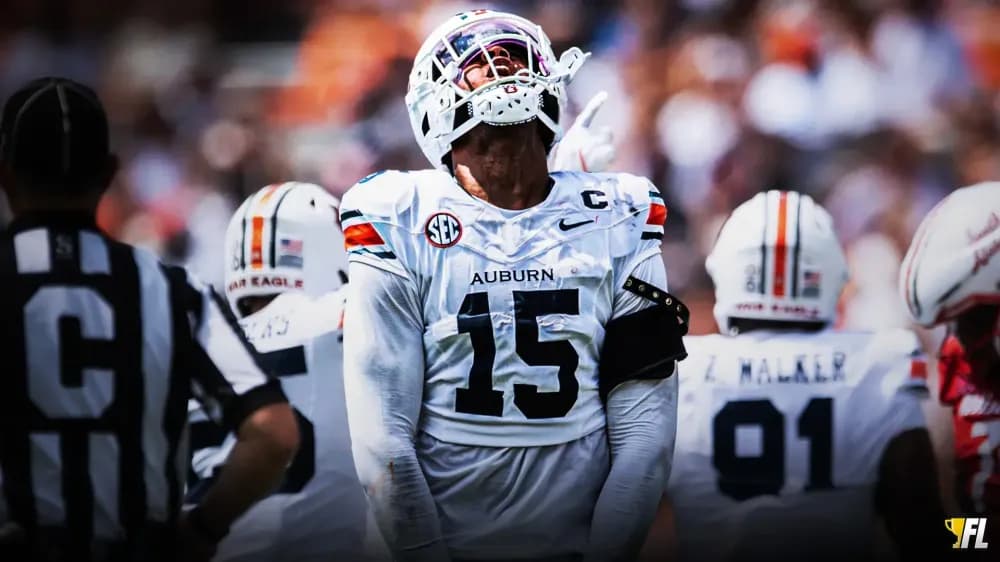
(EDGE) Keldric Faulk - Auburn
Starting with Crosby’s potential replacement, Keldric Faulk has found himself hovering around the middle of the first round in most respected mocks. While it’s a near-impossible task to immediately recoup Crosby’s loss of production, Faulk’s potential may give them their edge rusher of the future, a former five-star prospect with a top-10 combine athleticism score at the position.
Even though his pass rush stats regressed in his final year at Auburn, it’s worth noting that Faulk led all edge rushers in Run Stops over the course of his collegiate career, solidifying himself as one of the best run defenders in the nation. His production would help instantly elevate their defensive line, a unit that ranked well below league average in Run Defense PFF Grade.
(DT) Peter Woods - Clemson
Labeled as the top defensive tackle in this year’s class, Peter Woods is a mauler who would give the Raiders a violent interior presence to help bolster their defensive line. Like Faulk, Woods also took a step back in his final year at Clemson, yet his pedigree indicates he may blossom into a sure-fire starter should he be able to develop.
One area of concern with selecting Woods this early is that he is more productive when playing alongside an already established defensive line that excels at collapsing the pocket, as his lack of quick win talent against solo blockers will do little to elevate them. While he is capable of generating pressure in a clogged middle, the Raiders are more in need of someone who can take on their assignment themselves to help free up room for their teammates.
(OT) Spencer Fano - Utah
Since the start of the offseason, Spencer Fano has seen his draft stock steadily climb, potentially landing in the top 10. While this makes the likelihood of the Utah Utes offensive lineman being available at 1.14 nil, Fano may also be a casualty of a draft-day slip should the top of the board choose to fill other needs.
If Fano is available by the time the Raiders make their second selection, he would be a starter from day one, anchoring a line that received a PFF Grade of 56 or lower at every position. His versatility also gives them some flexibility as he is capable of playing on either side of the line, as well as filling in at guard if needed. Any boost in protection would go a long way in Fernando Mendoza’s development, making Fano a no-brainer if his name is still on the board.
The Case Against The Raiders Drafting A WR In Round 1
Even though the wide receiver position is a major need for the Raiders, they would be wise to use their cap space on an established player like Alec Pierce instead of patching it in this year’s class. Like Freedman, I am also skeptical of Carnell Tate if he slipped and was available at 1.14, and the Raiders can ill-afford to take a chance on Jordyn Tyson, who has struggled to stay on the field.
With the top of the class possessing major red flags, the gap between them and a second-day talent is smaller than years past, lowering the risk that is taken by punting on the position and selecting a receiver later in the draft.

Join Our Newsletter
Trusted by 400,000+ fantasy football players. Get access to Fantasy Life's free award winning newsletter and tools, all in one step.
By registering or logging in, you agree to our Terms of Use and Privacy Policy.